Impact Report 2025

In 2025 the rapid rise of AI disrupted the digital sector, changing how agencies work and where value comes from. For Torchbox, it made us more purposeful. More focused on the deep domain expertise we bring to charities and public sector organisations. More committed to helping our clients build responsible, sustainable digital products. And more determined to invest in our people and communities, so that we grow with new technology rather than being overtaken by it.
Reorganising around our specialist areas in 2024 helped us deepen our expertise, enabling us to deliver some of our most ambitious projects to date across more than 140 charities and public sector organisations. We also invested £1m in innovation, technology and Wagtail CMS, and launched our EOT Innovation Fund to co-invest directly with the organisations we work with, sharing the risk of exploring ideas with genuine transformative potential.
We also focused on maturing our accountability framework as an employee-owned business, launching the Torchbox Constitution, introducing a Co-owner Support Fund for colleagues facing serious illness, and welcoming Jo Undrell from John Lewis as Independent Trustee and Chair. Alongside this, we reduced our carbon footprint, maintained a self-reported B Corp score of 118.5, well above the 80-point threshold, and generated 0% of our revenue from high-carbon clients.
As technology becomes more complex and more commoditised, our impact-led culture becomes more important. It keeps us focused on work that matters and ensures we continue empowering positive changemakers.

Our clients
Empowering positive changemakers
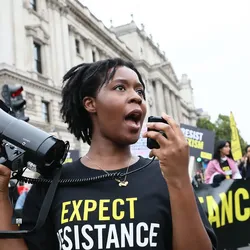
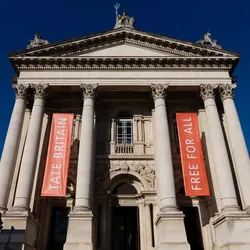
Our clients within the charity and public sectors share our purpose. In 2025, we partnered with 140+ such organisations, ranging from a landmark new partnership with Amnesty International UK to continuing our work with the Tate, helping one of the world's leading cultural institutions reach audiences in new ways. The organisations we choose to work with, and the ones we choose not to, are part of how we hold ourselves accountable to that purpose.

Clients from high-carbon industries
We maintained our record of generating 0% of turnover from high-carbon clients, and we’re committed to continuing this approach.
Potentially controversial sectors
As in previous years, amongst potentially controversial sectors (Alcohol / Arms / Coal, Oil or Gas / Politics / Gambling / Tobacco / Pornography / Religion), our work is limited to Alcohol, supporting Drinkaware’s public health work, and Religion, where we work with humanitarian-focused organisations including Islamic Relief, Muslim Hands, Open Doors UK, and Tearfund.
| Client | Sector |
|---|---|
|
The National Institutes of Health |
Public sector |
|
World Wildlife Fund - US |
Charity |
|
Office for National Statistics |
Public sector |
|
Wharton Interactive |
Charity |
|
Amnesty International UK |
Charity |
|
Guy’s and St Thomas’ NHS Trust |
Public sector |
|
Oxfam GB |
Charity |
|
Breast Cancer Now |
Charity |
|
Upshot |
Public sector |
|
Financial Reporting Council |
Public sector |
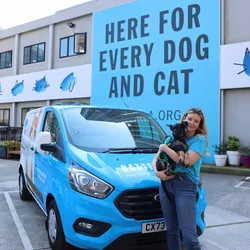
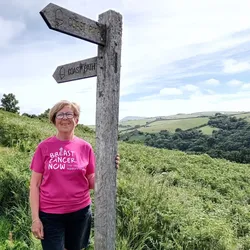
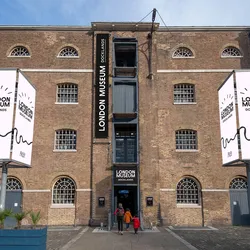
Click the images below to read about our work with clients such as London Museum, The Disasters Emergency Committee, and Guy's and St Thomas' NHS Foundation Trust.








Sustainability
Reducing our footprint
We continued to develop our approach to measuring and reducing our carbon emissions in partnership with Zevero.
Our biggest step forward was improving the quality of our carbon accounting. We strengthened our reporting methodology by increasing the use of activity-based data, giving us a more accurate picture of where our emissions occur and where we should focus our reduction efforts.
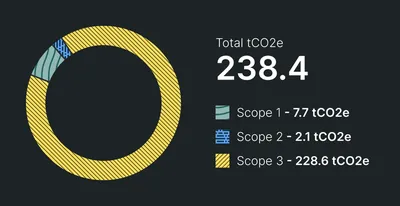
Our reported emissions for 2025 totalled 238.4 tCO₂e, 11.6% lower than the restated 2024 footprint. However, this reduction is not directly comparable with previous years because of the improvements we've made to our methodology. While the new approach results in more accurate reporting, it also means some of the year-on-year change reflects better measurement rather than genuine emissions reductions.
Although this limits direct comparison with previous years, it provides a more transparent and reliable baseline for measuring future progress and improves the comparability of our reporting with other organisations and suppliers.
Scope 1
Direct emissions from company-owned sources remain small at 7.7 tCO₂e (3.3% of our total footprint), resulting from the SSE Green Gas Plus biogas we use to heat our Bristol office.
During 2025, we also upgraded the building’s heating and cooling systems with newer, more energy-efficient technology to help reduce energy consumption and improve operational efficiency.
Scope 2
Our electricity-related emissions were 2.1 tCO₂e under the location-based method, while our market-based emissions remained 0 tCO₂e, thanks to the renewable energy tariff used by our Bristol office.
Scope 3
Value chain activities continue to make up the majority of our footprint, accounting for 95.9% of total emissions. The largest contributing categories were:
- Purchased goods and services — 109.1 tCO₂e (45.8%)
- Employee commuting and homeworking — 91.2 tCO₂e (38.3%)
- Use of sold products (client hosting) — 12.9 tCO₂e (5.4%)
- Business travel — 11.1 tCO₂e (4.6%)
Reported emissions for business travel and purchased goods and services were lower than in 2024. However, these categories also saw the most significant improvements in reporting methodology, meaning the year-on-year changes should not be interpreted as equivalent operational emissions reductions.
See our detailed 2025 emissions report.
Reporting methodology
We also strengthened our carbon accounting methodology to improve the accuracy and transparency of our emissions reporting.
Where possible, we moved from spend-based calculations to activity-based accounting, using operational data such as contractor hours and business travel activity. Under the GHG Protocol data quality hierarchy, activity-based accounting is considered a more accurate approach because it reflects measured operational activity rather than estimated financial spend.
We also embedded carbon accounting more closely into our operational processes, enabling us to monitor emissions throughout the year and identify reduction opportunities earlier.
Progress and looking ahead
We are committed to supporting the global ambition to limit global warming to 1.5°C and to reducing greenhouse gas emissions in line with climate science and international climate goals.
Improving the accuracy of our emissions data marks an important step in the maturity of our climate programme. While the methodological improvements introduced in 2025 mean we cannot directly compare this year's results with previous years or count these changes towards our emissions reduction targets, they give us greater confidence that future decisions and reported reductions will be based on more robust data.
Our long-term ambition remains unchanged: to reduce our greenhouse gas emissions in line with climate science and achieve a 50% absolute reduction by 2030 on our way to Net Zero by 2050. As our reporting continues to improve, our focus is increasingly turning to our supply chain, which remains our largest source of emissions, alongside responsible procurement and more accurate emissions data from suppliers.
The rapid growth of AI presents both opportunities and challenges. While these technologies have the potential to improve the way we work and the services we deliver, they also raise important questions about energy use, resource consumption, and environmental impact. We're committed to approaching AI thoughtfully by continuing to learn, challenge our assumptions, and consider sustainability alongside ethics, accessibility, privacy, and quality whenever we adopt or recommend AI technologies.
Responsibility for delivery of the climate action plan sits with the Senior Leadership Team, supported by Climate Action Voice Group. We allocate employee time and operational resources toward emissions measurement, reduction initiatives, sustainable procurement, policy development, and staff engagement activities.
Planned initiatives for 2026
- Strengthen sustainable procurement. Conduct a supplier sustainability audit and embed sustainability considerations into procurement and supplier conversations through our Environmental & Ethical Procurement Policy, helping us better understand and reduce emissions across our supply chain.
- Develop our approach to responsible AI. Build our understanding of AI's environmental impacts and embed sustainability considerations alongside ethics, accessibility, privacy, and quality in how we adopt AI internally and advise clients.
- Build capability and collaboration. Continue engaging employees, clients, and the wider sector through our Climate Action Voice Group, internal knowledge-sharing, and collaboration with charity and public sector organisations to identify opportunities to reduce environmental impact and share good practice.

Better business
Supporting the communities around us
Contributing to open source
We live and breathe open source on our projects, and are proud of our continued investment and stewardship of Wagtail, the leading open source Python CMS that started at Torchbox and now has a global community of users and contributors.
Wagtail Space 2025 was our biggest event ever, bringing together 435 people from 65 countries in a new online-first format, designed for everyone working with Wagtail. It was also a great opportunity to showcase recent improvements in Wagtail, like the new Autosave feature, our Wagtail AI package and AI guiding principles, improvements to StreamField block editing, and more.
The event was also an occasion to showcase the work of our four Google Summer of Code contributors; newcomers to open source who join the Wagtail project with support from our mentors. They made tangible improvements to the UX, security, sustainability, and accessibility of the CMS and sites built with it.
It’s sustained work like this that allows us to see clear year-over-year improvements on accessibility, in our third Global Accessibility Awareness Day report. We keep a similar long-term focus on sustainability, with Wagtail’s 2025 carbon footprint showing an 18% decrease year-over-year - now at 5,173 tonnes of CO2-equivalent emissions for 6,431 websites in our dataset.
We’re also proud of our continued involvement with the wider Django community. We are involved as sponsors of the Django Software Foundation and of DjangoCon events, as occasional contributors to Django core and to its wider package ecosystem.
Looking ahead, we see plenty more opportunities to keep innovating in the open. Pushing further on sustainability and accessibility, but also on responsible adoption of AI in open source.
Investing in innovation, together
This year we set up our Employee Ownership Trust Innovation Fund, setting aside £450,000 to invest in our own future and in the organisations we work with. The fund went into building our innovation team and co-investing directly in innovation projects with charities and public sector organisations, sharing the risk of testing ideas that might otherwise be too costly or uncertain to explore alone. These projects are about solving real problems, helping organisations reach more people, improve services, and work more effectively, while giving us space to experiment, learn quickly, and understand what works before anyone commits to more.
The approach benefits everyone involved. Our partners gain access to expertise and the opportunity to test ambitious ideas responsibly, while we develop new capabilities, deepen our understanding of emerging technologies, and build knowledge we can share across the sectors we work in.
With Breast Cancer Now, we explored how AI could help respond to the thousands of supporter messages they receive each week, the majority of which currently go unanswered, by routing and drafting responses with human experts kept firmly in the loop. With RNIB, we built ChatRNIB, an AI-powered chat tool within their Wagtail CMS that helps helpline staff find accurate information instantly, rather than transferring blind and partially sighted callers between teams. In both cases, the aim was the same: extend what these organisations can do, with people always at the centre of the solution.
For us, this is another example of what employee ownership makes possible. It gives us the freedom to invest in ideas with long-term potential, back organisations doing important work, and help shape the future of responsible digital services together.

Co-ownership
Employee ownership and what we got up to in 2025
Seven years into employee ownership, 2025 was the year we focused on making accountability more concrete, working on the mechanisms and structures that make co-ownership real.
The headline project was the Torchbox Constitution, which explains what employee ownership really means and sets out what is expected of co-owners, and gives everyone a way to hold each other and leadership to account. We updated our Deed of Trust and Articles of Association alongside it, so everything works together.
We also formalised how Board and senior leadership pay is overseen through our Remuneration Committee, chaired by our new Independent Trustee and ensuring senior remuneration is fair and proportionate, accountable to all co-owners rather than just the Board.
This year we answered 20 co-owner questions through our open Q&A process, covering everything from strategy and financial resilience to sustainability and wellbeing. Questions are now visible before they are answered, so co-owners can see what is on people's minds in real time.
We welcomed Jonny Peacock and Helen Chapman as new Employee Trustees, and Jo Undrell from John Lewis and Partners as our new Independent Trustee and Chair. Jo brings extraordinary experience from one of the UK's most celebrated employee-owned organisations and is already raising the bar on what co-ownership can look and feel like here. We said farewell to Ann Tyler, our first Independent Trustee, and to Ben Heasman who stepped down as Chair after three years of thoughtful, steady leadership. Both shaped the Trust in ways that will outlast their tenure.
This year we also launched a Co-owner Support Fund to provide financial support to colleagues facing prolonged illness or injury, with each application reviewed individually by the Trustees.
Co-ownership beyond Torchbox
For us, co-ownership is about more than how the business is run. It is also about how we contribute to the communities around us, giving co-owners the opportunity to direct support, volunteer their time, and strengthen the wider social impact ecosystem.
Through Torchbox 250, co-owners continued to nominate organisations each month to receive a £250 donation. In 2025, recipients included Young Enterprise, Children's Heart Surgery Fund, Rugby Pentru Toți, Talk Club and Pregnant Then Screwed.
Co-owners also dedicated 19 Community Action Days during the year, with 11 people volunteering their time to support causes close to home.
Alongside this, we continued our sponsorship of Tech for Good South West, helping bring together charities, social enterprises, public sector organisations and technology professionals to share ideas, collaborate and increase positive impact across the region.
Recruitment
Our recruitment approach remained intentional and aligned with our long-term organisational goals. While hiring volumes were still measured, we continued to prioritise internal progression, creating opportunities for co-owners to grow into new roles and build on existing expertise.
Alongside this, we took a more considered approach to external hiring, with a greater focus on building and strengthening our freelance partnership network. This allows us to respond flexibly to changing needs, bring in specialist skills where needed while maintaining a sustainable and balanced approach to growth. Together, this approach supports the development of our existing talent, and ensures we can adapt and bring in new perspectives in a way that aligns with our values.
A diverse and inclusive workplace
We focused on moving from policy-setting to the everyday practice of inclusion. We continued our approach of highlighting important awareness days to encourage allyship, including marking World Menopause Day to keep these vital conversations open. Our Spark Talk series remained a key platform for learning, featuring a session from Everyday Racism, who spoke to us about the work they do.
Beyond these conversations, we have refined our recruitment processes to ensure they are as accessible and fair as possible. We reviewed all our written recruitment materials to ensure they are clear and easy to understand, making it simpler for candidates to request adjustments at any stage of the process.
We also introduced score-based evaluation across all roles; by using standardised questions and scoring criteria, we are ensuring our hiring decisions are informed by data and merit, specifically aimed at reducing unconscious bias. To support more inclusive recruitment practices, we advertised several roles on Five Hour Club, a job platform promoting flexible working opportunities for parents and people returning to work. This helped us reach a broader range of candidates and support people looking for flexible, values-driven roles that fit around caring responsibilities and other commitments.
Our community
Every year since 2022, we run an anonymous Diversity and Inclusion survey. These surveys are more than just a data-tracking tool; they help us understand who makes up the Torchbox community and ensure our culture matches our values.
This year’s results show a high level of openness across the team. For the first time, 'Prefer not to say' responses dropped to 0% across our core demographic questions, giving us a clear, honest picture of our community today.
Here are our key stats from this year's survey:
- Gender identity: 56% women, 40% men, and 4% non-binary.
- Sexual orientation: 18% of our team identify as LGBTQIA+.
- Neurodiversity: 30% of our co-owners identify as neurodivergent.
- Disability and health: 16% live with a disability or long-term health condition.
- Ethnicity: 14% of our co-owners are from Black, Asian, or Mixed heritage backgrounds.
- Caring responsibilities: 33% of our team balance caring roles outside of work (this includes 27% childcare and 6% adult care).
What we’re doing next:
- Simplifying our family-friendly support: We are going to bring all our family friendly policies together into one clear, easy-to-read guide. This will make it simpler for co-owners to find the exact support they need, when they need it.
- Using the data for our B Corp certification: This is a practical way to ensure we are living our values as a co-owned business, committing to our current practices and future goals.
- Tracking our diversity hiring data and recruitment processes: This will give us the tools to see who is applying to Torchbox and ensure our recruitment pipeline is genuinely fair.
- Using our data to spot gaps: Once we have our hiring data, we can look at it alongside this survey to see where our representation gaps are. This will help us figure out exactly what we need to change, whether that’s how we write our job ads or where we post them to better attract diverse talent to the team.
Wellbeing
Over the last year, we've been looking at wellbeing through a wider lens. We’ve focused on the day-to-day things that really affect how we feel at work. For us, that meant making sure our management is truly supportive, our connections are genuine, and that we all have the right tools to look after ourselves and each other.
We have focused specifically on burnout prevention. Rather than treating burnout as an individual issue, we approached it as a collective one; we ran training for all co-owners to help identify the early signs of stress, followed by specialised sessions for our managers on how to provide real, practical support.
To follow on from this, we have evolved our approach to one-to-ones. Recognising that these are the most critical touch points for a co-owner's wellbeing, we have intentionally moved away from purely task-focused updates toward a coaching-led model. This gives managers the tools to explore the how of work, identifying where co-owners find flow and where they find friction. As part of this, we introduced the use of utilisation reports as a supportive tool; by looking at the working week together, managers and co-owners can identify patterns and adjust workloads in a meaningful way before they become overwhelming. Our work here isn’t finished, and we see this shift toward coaching as an ongoing journey rather than a one-off change.
Building on our 2024 social connection goals, we recognised that remote work requires intentional policy to prevent isolation. We updated our co-working policy to actively support our fully remote team in accessing local co-working workspaces. It’s a simple way to help people find that sense of community and create a healthier boundary between their work and home lives..
To ensure these changes are effective across the company, we continued our quarterly pulse surveys. By maintaining a close eye on wellbeing sentiment, we can stay close to how the team is really feeling in real-time and make sure we’re staying on the right track.
While these structural shifts provide the foundation for a healthy working environment, our Wellbeing Voice Group plays a vital role in bringing our culture to life. They focus on nurturing our community through social connection, shared celebrations, and the everyday initiatives that make Torchbox a joyful place to work.
Wellbeing Voice Group
Through the Wellbeing Voice Group, we continued to promote Headspace, which provides all co-owners and their families with access to guided meditations, sleepcasts, workouts for the body and mind, and much more.
We also introduced a series of informal co-working sessions, creating space for people across our global team to work alongside one another, catch up, and feel more connected throughout the working week.
The co-working session helped me focus and it was nice to feel social without the busyness of the office."
For World Mental Health Day, we launched Wellbeing Your Way, which allowed all co-owners to make a small claim towards something to support their mental health and wellbeing. Over half of us took part, making it one of the most successful wellbeing initiatives to date. It also prompted some really lovely conversations about what people find helpful for their own wellbeing.
We also continued to get together for our Wellbeing Breakfasts, a relaxed way to start the day together outside of the busy working day.

B-Corp
B Impact areas
We maintained our B Corp certification with a self-reported score of 118.5 – well above the 80-point threshold and a reflection of our ongoing commitment to people, planet, and purpose.
In our 2024 Impact Report, we outlined a number of ambitions for the year ahead, including embedding the updated B Corp requirements across the business, mapping the new standards against our existing policies and practices, accelerating our carbon reduction plan, strengthening how we measure and report the social and environmental impact of client work, and expanding our pro-bono and skills-based volunteering initiatives.
While progress against some of these areas was slower than initially anticipated due to wider business priorities during the year, these commitments remain an important focus for us and have continued to shape our direction and planning.
One significant step forward in 2025 was the creation of a dedicated Social Impact Coordinator role. This role has been introduced to help drive greater accountability, coordination, and momentum across our impact and B Corp-related work, ensuring we are better positioned to embed these initiatives across the organisation and deliver on our long-term commitments.