

Google Marketing Live 2026: what charities and nonprofits should pay attention to
As expected, AI dominated the conversation at Google Marketing Live 2026. From AI-generated creative and conversational campaign management to “ads becoming answers” inside AI-powered search, nearly every announcement focused on automation, prediction and machine-assisted discovery.
Most of it was aimed squarely at ecommerce brands. There was very little aimed directly at charities, nonprofits or public sector organisations.
But underneath the shopping demos and AI announcements, there was a more significant shift taking place around how people discover organisations online.
Here are the four updates we think charities should focus on most.
1. Search is becoming a journey of discovery, not just intent capture
One of Google’s biggest themes this year was the “new era of search”.
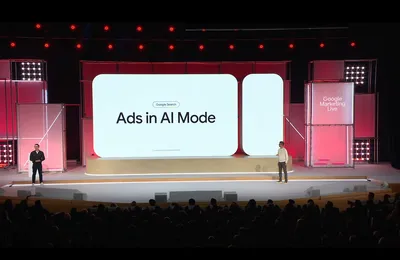
AI Overviews and AI Mode are changing how people search. Queries are becoming longer, more conversational and more exploratory. Google shared that AI Mode searches are already around three times longer than traditional searches, giving advertisers richer intent signals much earlier in the journey.
Google also heavily promoted AI Max, positioning it as a way to capture intent beyond traditional keyword targeting.
But one line from the event stood out more than anything else:
“Turning your ads into answers.”
That signals a meaningful shift in how Google is encouraging advertisers to think about Search.
Traditionally, paid search has been about matching keywords, winning auctions and driving clicks.
Now, Google is increasingly positioning ads as part of the AI-generated response itself.
For charities, that could become even more important. Many nonprofit search strategies still rely heavily on high-intent searches like:
- donate
- volunteer
- support
- fundraise
- petition
- apply for help
While those searches will still matter, supporter journeys are becoming more exploratory.
Someone may no longer search:
“donate to homelessness charity”
Instead, they might ask:
“How can I help people experiencing homelessness near me?”
Or:
“What organisations are helping families affected by flooding?”
In future AI-powered search experiences, organisations may increasingly need to optimise not just for visibility, but for recommendation and relevance.
What charities should do now
Start testing AI Max carefully
Google encouraged advertisers to lean into AI Max and broader AI-powered search automation. That doesn’t mean replacing existing Search activity overnight. But charities should begin testing how AI-assisted campaign types perform alongside more traditional keyword structures.
The biggest gains are likely to come from:
- stronger audience signals
- better conversion data
- clearer messaging
- stronger landing pages
- improved first-party data
Focus less on rigid keyword structures
Google’s direction of travel appears fairly clear, with less manual keyword management and more intent-based targeting. That means charities may need to spend less time building enormous keyword lists and more time improving:
- creative relevance
- supporter journeys
- audience understanding
- data quality
Monitor how AI Overviews affect traffic
AI-generated search experiences are already changing click behaviour – even more so with how organic search is going through a major revamp in favour of AI.
Charities should start monitoring:
- branded search trends
- non-branded visibility
- click-through rates
- donation journeys
- informational content performance
Especially as AI Overviews continue expanding across search experiences.
Top tip
With the rise of AI Max and Performance Max, we’re seeing an increasing trend of charities unwittingly bidding on the brand terms of other charities, even if you have account level negatives, misspelling can fall through the gap - after all, search is becoming increasingly broad.
Our top tip would be if you’re testing AI Max or Performance Max, make sure you review your search terms daily, ensuring they’re relevant and that you've addied campaign level exclusions to stop you bidding on your fellow charities’ brands.
There’s also a new feature called ‘AI Briefs’, which will prove more effective than just negative keywords with the rise of more conversational searches. We’ll go into more detail about this further down.
YouTube featured heavily throughout the event
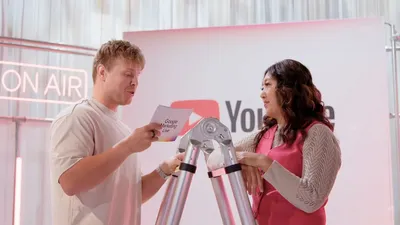
Google announced expanded placements for Demand Gen campaigns across YouTube Shorts, Connected TV and in-stream inventory. Google also shared that Demand Gen campaigns have reportedly driven 30% growth in conversions over the past six months, reinforcing how heavily the company is investing in these formats.
Much of the messaging focused on YouTube’s ability to compete more directly with platforms like Meta and TikTok, with Google claiming that 55% of YouTube Shorts viewers are not on TikTok.
The platform is no longer being positioned purely as an awareness channel. Instead, Google is increasingly encouraging advertisers to think about YouTube as both a discovery and performance platform, capable of driving action across the full supporter journey.
This is particularly relevant for charities because YouTube often aligns naturally with:
- storytelling
- emotion-led creative
- human-centred campaigns
- cause awareness
- longer-form educational content
Video remains one of the strongest formats for building trust and emotional connection, particularly for organisations communicating complex issues or lived experiences.
Google also introduced new creator partnership tools, making it easier for brands to identify YouTube creators and use creator content directly within campaigns.
For charities, this may create opportunities to work with campaign ambassadors, supporters, subject matter experts and community voices in more integrated ways.
What charities should do now
Test Demand Gen beyond awareness activity
Demand Gen campaigns now span YouTube, Discover, Gmail and Maps placements. For charities, this opens up opportunities to build more connected supporter journeys across channels and devices.
The strongest results are likely to come from organisations thinking beyond siloed campaign structures and focusing on full-funnel journeys instead.
We’re seeing increasingly strong results on Demand Gen for many charities we work with.
Invest in creative variety
One of the clearest practical recommendations from the event was around creative diversity.
Google repeatedly highlighted the importance of horizontal video, vertical video, multiple creative variants and creative testing.
That matters because supporter behaviour changes heavily across placements and formats.
The good news is charities don’t necessarily need expensive production budgets. Authentic, human-centred storytelling often performs better than highly polished commercial creative.
Repurposing existing campaign footage into shorts, cutdowns, testimonials and vertical edits can go a long way.
Explore creator partnerships carefully
Google made a major push around creator partnerships this year. That won’t be right for every organisation, but for some charities, mission-aligned creators could become increasingly valuable to reach younger audience, build trust, drive advocacy and support fundraising campaigns.
The key is authenticity as forced influencer partnerships rarely work well in the nonprofit sector.
Top tip
Utilise demand gen and make it authentic. Content that performs well is content that is designed for the platform. You’re unlikely to see the best results reusing the same GIF you’ve used for the last few months, but purpose-led live action shots with a clear hook have performed well.
We’re seeing a number of charities work with influencers too, of varying sizes, and there’s a clear payoff here. The key is making sure the fit is, again, authentic and not forced.
3. Better measurement and first-party data are becoming essential
Measurement was one of the strongest themes throughout the event.
Google repeatedly described measurement as:
“the competitive edge that powers AI.”
The company announced:
- Meridian media mix modelling
- cross-channel forecasting inside GA360
- attributed branded searches
- qualified future conversions
- incrementality tools
- Google Tag Gateway updates
While these updates may sound enterprise-focused, they could become genuinely useful for charities. Many nonprofit journeys are long and difficult to measure. Someone may first encounter a campaign weeks or months before donating, volunteering or taking action. Traditional attribution models struggle to capture that properly.
What charities should do now
Strengthen first-party data foundations
Google made it very clear that AI-powered optimisation depends on strong first-party data.
That means charities should prioritise:
- CRM integrations
- offline conversion imports
- consent management
- server-side tagging
- cleaner audience data
- conversion quality
Organisations with fragmented or incomplete data will likely struggle to get the full benefit from newer AI-driven campaign types.
Move beyond last-click reporting
One of the more interesting announcements was “Attributed Branded Searches” alongside “Qualified Future Conversions”.
Google is clearly trying to better connect upper-funnel activity with longer-term outcomes. That’s particularly relevant for charities where trust takes time, awareness matters, and supporter journeys are rarely linear.
A campaign that increases branded search demand today may influence donations or volunteer actions much later.
Review your tagging and consent setup
Google also announced changes around Google Signals, Ads Consent Mode and privacy governance.
Charities should review:
- Consent Mode implementation
- audience size impacts
- remarketing implications
- tagging quality
- server-side tagging readiness
Google Tag Gateway was heavily positioned as part of a stronger “data foundation”.
Don’t overlook forecasting and incrementality
One of the less flashy but potentially most valuable updates was Meridian forecasting inside GA360.
For many charities, it can be difficult to prove the value of:
- awareness campaigns
- video activity
- upper-funnel investment
- cross-channel influence
Better forecasting and incrementality modelling could help organisations make stronger budgeting decisions and build more confidence around long-term investment.
Top tip
Make sure you’re confident in your data tracking and you have a robust setup in place. For advertising algorithms, the quality of the input dictates the quality of the output. If you know your tracking has gaps, you’re not giving your paid campaigns the best chance of success.
4. AI-assisted marketing workflows are becoming mainstream
The final major theme was operational AI.
Google introduced:
- AI Brief (introduce your brand guidelines through conversational AI)
- Ask Advisor (get insights about your ads across channels)
- AI-generated creative inside Asset Studio (generate creatives through AI)
- conversational campaign management (less manual campaign setups)
- automated testing workflows (A/B test with ease)
This suggests Google wants advertisers to manage campaigns through prompts, guidance and AI-assisted systems rather than purely manual workflows. For lean nonprofit teams, some of these tools could eventually become really useful. But it’s important to separate operational efficiency from strategy.
AI can help:
- speed up analysis
- generate creative variations
- summarise reporting
- accelerate testing
- reduce manual admin
It cannot replace:
- audience understanding
- safeguarding considerations
- ethical judgement
- campaign strategy
- human storytelling
What charities should do now
Use AI to support workflows, not replace expertise
One update we found particularly interesting for charities was AI Brief. Rather than simply generating ads automatically, it allows advertisers to guide AI systems using natural language instructions around tone, messaging, exclusions and brand guidelines.
For charities working in sensitive sectors, that could become an important safeguard rather than just an efficiency tool.
Messaging nuance matters when communicating around issues like health, poverty, crisis response and vulnerable audiences, especially when users’ searches are becoming more conversational, and less focused on phrase or exact match keywords.
Use AI where it removes operational overhead
Google also introduced Ask Advisor, a conversational assistant that connects across Google Ads, Analytics and other Google products.
For smaller nonprofit teams, tools like this may eventually help reduce time spent on reporting, analysis, campaign troubleshooting and performance reviews. Making more advanced optimisation accessible without large in-house teams.
Maintain strong governance
Human oversight matters – especially when campaigns involve:
- vulnerable groups
- healthcare
- safeguarding
- emergency response
- public trust
The organisations that benefit most from AI tools are unlikely to be the ones adopting every new feature immediately. They’ll be the organisations with:
- strong data foundations
- good creative
- clear governance
- realistic testing frameworks
- strong audience understanding
Top tip
AI can speed up workflow, but it can’t yet replace the human element. Test AI tools incrementally and see how they can support your team, but be aware of its limitations. See what genuinely works for your organisation, and how it can support your goals. If you’re not confident with AI tools, or don’t currently have any AI policies in place, we have a team of experts available that can support.
What charities should prioritise after GML 2026
Google Marketing Live 2026 may have focused heavily on e-commerce, but the underlying platform changes will affect charities and nonprofits.
Across almost every announcement, Google signalled the same direction of travel:
- less manual campaign management
- more AI-assisted optimisation
- broader intent matching
- stronger reliance on first-party data
- better cross-channel measurement
For charities, we recommend:
- Strengthening first-party data and conversion tracking
- Testing Demand Gen with better creative variety
- Preparing for more AI-driven search behaviour
- Improving measurement beyond last-click attribution
- Exploring AI-assisted workflows carefully and responsibly
Despite all the automation announcements, one thing is clear: the charities that adapt best won’t necessarily be the ones using the most AI tools. They’ll be the organisations with the clearest understanding of their audiences, the strongest data foundations and the best storytelling.
Looking for support with anything we've outlined above?
More
-

How to recruit volunteers: A practical guide for charities
Danielle Wilkin Senior Digital Marketing Executive
-

The Charity Digital Skills Report 2026: in conversation with Zoe Amar
Lisa Ballam Marketing Director, Trustee Director
- See more posts