
AI Max: A complete guide for nonprofits
As AI Overviews and AI Mode become part of everyday search, we’re beginning to see fundamental changes in how people seek and interact with information. And the impact for nonprofits is significant.
Organic traffic is dropping, Google Ad Grants performance has declined, and in some cases, we’re seeing ads lose visibility because they can’t keep up with the demands of AI search queries.
In our recent blog, we outlined five ways charities can remain visible in the changing digital landscape. One of these is to start testing Google’s latest ad solution, the AI Max beta feature, released in May 2025.
With ads coming into AI Overviews and AI Mode in early 2026, charities need to act now to avoid losing out on featuring in Google's generative AI search results.
The search landscape is changing, and our approach needs to change with it.
What is AI Max?
AI Max is Google’s latest development in search campaigns. It goes beyond search terms with targeting and creative enhancements based on multiple signals and user behaviour.
Where traditional campaigns relied on matching exact keywords, AI Max uses machine learning to interpret meaning and context, surfacing your ad even when a search query doesn’t contain your chosen keywords.
In practice, this means:
- Keyword expansion – With search term matching, AI Max expands your existing keywords using broad match and keywordless technology to find more relevant and high-performing search queries.
- Ad creative personalisation – Headlines and descriptions are adapted in real time based on the user’s intent and context.
- URL expansion – The landing page is automatically changed to best match what the user is looking for.
It’s a more flexible, intent-led approach to search.
What are the risks, and how can I protect brand reputation?
AI Max continues Google’s shift from manual targeting to machine learning-led discovery. For nonprofits, this essentially means less control. Such as:
- Broader targeting based on intent rather than exact match terms.
- Creative that flexes with context.
- A need for continual monitoring and optimisation.
AI Max gives Google’s automation more flexibility, but with that comes risk, particularly for charities dealing with sensitive subjects or where there’s risk of misinformation.
We recommend using the following tools to keep campaigns aligned with brand values and messaging:
- Negative keyword lists – Set up a robust list before launch and keep reviewing search term reports to exclude irrelevant queries.
- Charity-provided ad copy – Supply high-quality headlines and descriptions so Google’s AI has strong material to build from.
- URL and asset exclusions – Make sure users are sent to the most relevant pages and prevent unwanted phrasing from appearing in your ads.
- Regular reviews – Check new ad variants regularly to maintain accuracy and tone.
Google provides results showing performance at asset level (headlines, descriptions, and URLs used).
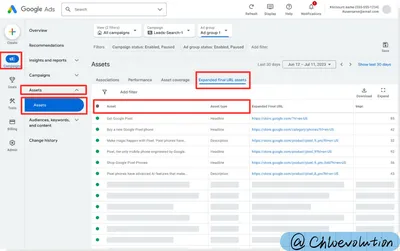
It also includes a search term report highlighting whether keywords were from your defined list or generated by AI Max.
| Keyword type | None |
|---|---|
|
Exact match |
✔️ Added |
|
Exact match (close variant) |
None |
|
AI Max |
None |
Our recommendations
Even with these guardrails in place, there is still a risk that URLs or AI-generated content could be irrelevant, or worse, damaging to your brand.
For this reason, we recommend that nonprofits start by testing keyword expansion only, which has already shown strong results. This approach limits risk while allowing you to begin testing and gathering data as you put other safeguards in place (or until Google becomes a little more reliable).
Why is it important to test now?
As Google expands AI-driven search, ads are appearing above and below AI Overviews. In early 2026, they will surface within AI Mode, Lens, and Circle to Search. These placements cover all major campaign types, including Search, Shopping, and Performance Max, and will appear across all devices.
Ads without broad match keywords or AI Max turned on won’t appear in these placements, so it’s essential to start testing these now.
Early testing shows that people using AI Mode are asking longer, more detailed questions - around two to three times the length of traditional searches. Rather than typing short phrases, they’re asking follow-up questions, making comparisons, and exploring topics in depth.
For example, instead of searching “Donate to mental health charity”, a user might ask: “Which mental health charities offer the most support for young people in the UK?”
AI Max helps ensure your ads remain visible in this kind of search environment, where intent and context matter more than exact phrasing.
What results can I expect?
In our early tests, we’ve seen:
- CPAs halved
- ROAS doubled
- CTRs doubled
- CPCs more than halved
Whilst there’s more testing to be done, these early results indicate that this new feature is a way to drive more traffic and conversions, which have both been impacted by AI search.
What are the limitations of AI Max?
As queries become more personalised, there are limits to how much search query data Google can share without facing privacy issues. You might find that keyword categories become increasingly hidden.
AI Max isn’t replacing human strategy, but it does expand what’s possible. Whilst automation will handle more of the matching and optimisation, thoughtful campaign design, clear messaging, and ethical targeting will remain critical.
As with Performance Max, we’ll continue to test, learn, and share best practices to help nonprofits make the most of these changes, while keeping impact and mission at the centre.
Ready to test AI Max or want to chat about what it means for your campaigns?
More
-

Five ways charities can remain visible in the changing digital landscape
Jess Mackereth SEO Consultant
-

Building a greener, more accessible digital home with WWF-US
Lisa Ballam Head of Marketing, Trustee Director
- See more posts