

Navigating change and staying true to our values: A Q&A with our CEO, James
This year marks Torchbox’s 25th birthday, and James has been a huge part of that journey for the past eight years. I recently sat down with him to reflect on what’s changed, what our clients need right now, and where he sees the next chapter taking us.
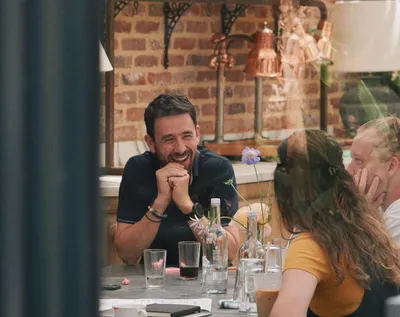
What are the biggest changes you've seen since you first joined?
When I look back over the past eight years, a huge amount has changed, not just for Torchbox, but in the world around us. We've lived through economic uncertainty, a pandemic, and now a major shift driven by AI.
The biggest change for Torchbox has been becoming employee-owned. We were always values-driven, but employee ownership has embedded that into how we make decisions and how we operate. We're building something sustainable for our co-owners, our clients, and the communities they serve.
It also means the money we make can be channelled back into our people and Torchbox. For example, since 2022 we've averaged a 14% profit share, and this year alone we're investing around £1 million into product development and innovation.
The other thing I'd highlight is our reach. When I first joined, we were a 50-person, well-respected agency working with mid-sized UK charities, with a handful of clients using Wagtail, our open source CMS. Now, we're one of the leading digital agencies for charities and the public sector, working with organisations like RNIB, WWF, Tate and the National Archives. Wagtail now powers sites for NASA, the NHS, Google and the US National Institute for Health, and the most recent Wagtail community event brought together hundreds of people from around the world for its biggest event yet.
That journey from small agency to sector leaders with global impact still surprises me.
We’re navigating one of the quickest periods of change the sector has seen. How do you balance moving forward with staying true to our values?
Our values aren’t a reason to stand still - they shape how we move forward and make decisions. We exist to empower positive changemakers, so when we explore something like AI, the question has to be “does this actually make things better for the communities our clients serve?”
With London Museum, we used AI to create richer connections between their editorial stories and collection objects, so a journey that starts on a page about Stormzy can take you into grime culture, political activism or Croydon. It encourages deeper, more meaningful exploration, helping more people discover London’s history.
With RNIB, we built an AI chat tool that helps helpline staff find answers faster, so people with sight loss aren’t passed between teams when they need support.
The way we stay true to our values is by using new technologies to improve outcomes for real people, not just to move faster or cut costs.
With that pace in mind, what do you think clients need most from us right now?
Right now, clients need a partner who can help them make sense of what's happening around them. We've worked with charities and public bodies for 25 years, so we understand how they operate, how they're funded, the governance they work within, and the pressures they face. This means we can provide clarity, even when so much is changing.
A good example is the impact of AI Overviews, which have hit the charity sector hard. We've seen around a 60% drop in clicks in Google Ad Grants accounts. Because we work with organisations like Diabetes UK, Islamic Relief UK and Disasters Emergency Committee, we see these trends at scale and can help clients adapt.
For example, Sight Scotland's Grants account was underperforming - they had access to $10k a month in free advertising but were only using $600 of it. By combining SEO improvements with a focused Grants strategy, we turned that around, and they're now they're driving 10 times more monthly website users towards key information about sight loss support.
Whether it's service design, public sector innovation, or early-stage AI experimentation, clients need a partner they trust to tell them what's changing, what isn't, and the most responsible route forward.
How do you make sure the team feels supported and prepared as new technologies and ways of working become part of everyday life?
This is the biggest change I've seen in my career, and people are feeling it. We have to acknowledge that.
Being employee-owned pushes us to be open about how the market is changing and how we're responding. But we've learned that transparency alone isn't enough. When everything feels uncertain, people need to know what's staying the same as much as what's changing, and they need space to figure out how they'll adapt, not just be told what to do.
That's shaped how we've approached this year. We've refreshed our vision and sharpened our priorities, giving people a clearer picture of where we're heading, so they can see how they fit into the bigger picture, rather than just being told what's changing.
Beyond that, we've set up dedicated funding and an Innovation Board to give people a structured way to explore new ideas. We want people to be involved in shaping what comes next, not just responding to it. A good example is Sonar, an AI interviewer we've built with Guy's and St Thomas' NHS Foundation Trust that lets us conduct user research at scale. That came from our team experimenting with what's possible. We conducted over 80 interviews and reached people we might not have been able to with traditional methods.
No one has a crystal ball, and things will keep shifting. But being consistent, being honest, and giving people the space and structure to explore new ideas goes a long way to help them feel supported through it.
What’s the hardest part of leading through constant change?
The hardest part isn't the change itself. The hardest part is knowing that the people in the business don't always have the same context.
Your instinct is to hold back the more uncertain or difficult things because you don't want to add pressure, but people don't actually want that. They want you to be straight with them.
That's why communication matters so much. Not just telling people what's happening, but giving them enough context to feel secure and to contribute. The more people understand the why, the better ideas they bring, the more they challenge assumptions, and the more ownership they take.
The hardest part is making sure we don't fall into the trap of thinking everyone has the same context and resisting the urge to protect people from things they'd actually rather know about. I don't always get that right, but I'm working on it.
Where do you think we can be more ambitious?
I think the biggest opportunity is helping our clients be more ambitious. A lot of the organisations we work with know things are changing, especially around AI and service innovation, but because of how they're structured, it's hard for them to get funding for early-stage ideas. They can see the potential, but don't have the space or budget to explore it.
That's where we can step in. We've set up a co-fund where we invest alongside organisations to explore new ideas together, and we are doing this with clients such as Avon and Wiltshire Mental Health Partnership NHS Trust and Breast Cancer Now.
With Breast Cancer Now, we've turned one of their early ideas into a working proof of concept, demonstrating how agentic AI could help their small team triage and draft responses to the thousands of messages they receive, while keeping humans firmly in control.
For me, being more ambitious means backing our clients to explore what's possible, not just delivering what they already know they need.
As we look ahead, what do you hope Torchbox will be known for in the next chapter?
I don't think what we're known for should change. Our mission is hard-won: to empower positive change-makers. I want that to stay at the centre of everything we do.
What I hope is that we carry this confidently into this next chapter. I want us to be seen as the partner who helps charities and public sector teams make their services genuinely better, not just more efficient, but fairer, more accessible, more sustainable and more impactful.
If we keep showing up with that same ambitious, transparent and practical approach, I think we'll be just as proud of the next 25 years as we are of the first.
More
-

How Breast Cancer Now is turning AI ideas into action
Lisa Ballam Head of Marketing, Trustee Director
- See more posts