
Charity leadership in the age of AI
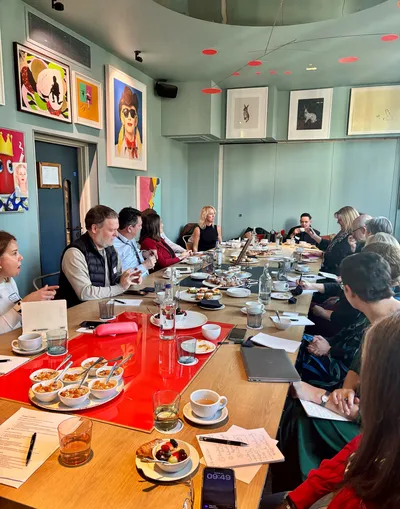
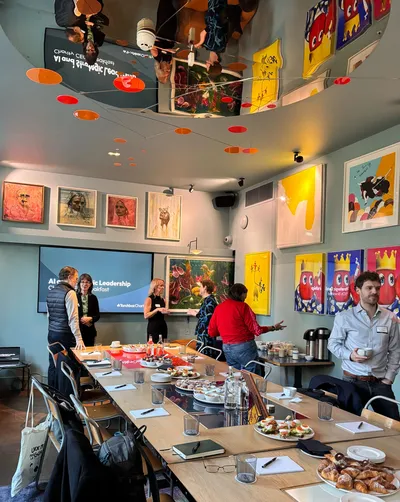
Our latest breakfast event brought together 15 charity CEOs at the Groucho Club to discuss the reality of leading an organisation when the technological ground is shifting on a daily basis.
Leaders from organisations including Mind, Guide Dogs, Breast Cancer Now, Alzheimer’s Society, Women’s Aid and St John Ambulance sat down for a warm and open conversation on the pressures of making final decisions when there is no established playbook.
Impact over efficiency
The conversation quickly moved past using AI just for productivity. Instead, the focus was on how it can amplify a mission. There was a strong feeling that we should use AI to achieve "abundance", reaching marginalised or "unreachable" communities that we simply haven't had the resources to help before. As several leaders noted, if the tech doesn’t serve the mission, it’s just noise.
The myth that slow is safe
A major tension in the room was the speed of change. In the charity sector, moving slowly is often seen as being responsible or safe. But the consensus was that standing still is actually one of the biggest risks we face.
We heard about different approaches:
- A structured "Educate, Equip, Empower" framework that identified 134 different AI opportunities.
- Other charities are allowing "walled gardens" where staff can experiment without risking the whole organisation.
The takeaway was that we can’t wait for a perfect three-year strategy. We need to move at speed, but do it responsibly.
Governance and the "Board gap"
There was a blunt admission that most boards aren't ready for this. Many lack the digital expertise to provide real oversight. To fix this, some leaders are setting up "AI Councils" as safe playgrounds for learning, while others are completing university-level AI courses themselves to ensure they can lead with confidence.
When things go wrong
The most sobering parts of the morning were the real-world examples of AI risks.
- One charity shared a chilling incident where a chatbot advised a 13-year-old to commit suicide. While they intervened in time, it was a stark reminder of why "human in the loop" is non-negotiable for high-stakes care.
- Another CEO’s team successfully cloned their voice using a BBC Radio 4 interview for a phishing test. It showed how easily our most vulnerable beneficiaries could be targeted by highly believable scams.
- In recruitment, there is a growing problem with AI-generated applications that bear no resemblance to the actual candidate in the interview, which is starting to break trust in the hiring process. A solution offered to this is to openly ask a candidate how they’ve used AI in their application.
Challenging our assumptions
The group challenged the idea that "human contact is always best." In mental health, some neurodivergent users or young people actually prefer interacting with an AI because it feels less judgmental than a person.
We also saw a flip in the "digital native" narrative. Many leaders found that their younger staff were actually the most reticent or skeptical about AI, particularly regarding ethics and image generation.
Moving together
The strongest feeling in the room was that no one wants to do this alone. Whether it’s international development charities collaborating on new frameworks or health charities sharing cybersecurity tips, there is a massive appetite for the sector to move as a collective.
The morning proved that the most valuable thing we have right now isn't a fixed strategy document, it’s the space to say "we don't always know the answer" and learn from each other in real-time.
Let’s co-fund your next AI innovation project
Got an idea that could drive real impact? We’ll co-fund up to £15k to help you test it
Lisa Ballam Head of Marketing, Trustee Director
Learn moreMore
-
Let's co-fund your charity's next AI innovation project
Lisa Ballam Head of Marketing, Trustee Director
-

Five ways charities can remain visible in the changing digital landscape
Jess Mackereth SEO Consultant
- See more posts