


Owning the future together: reflections from the EOA Conference
This year’sEOA Annual Conference brought together more than 850 people from across the employee ownership community. Across two days, we heard from EO leaders, trust board members and employee owners at different stages of their journey.
With a theme of Owning the Future, the conference explored what helps employee-owned businesses thrive over the long term. We’ve captured some of the ideas that resonated most, and how we’ll be thinking about them at Torchbox.
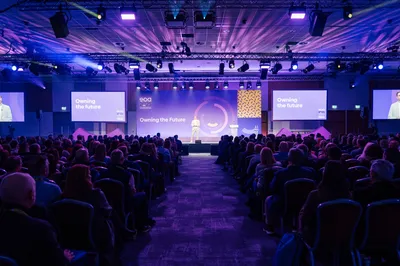
Photos by Chris Read-Jones Photography for EOA Conference
EO across generations and seniorities
A recurring thread was how today’s workplaces often span up to five generations, and co-ownership has to work for all of them. Henry Rose Lee explored how different generations communicate, make decisions and expect to be led, and how acknowledging these differences can strengthen EO culture.
Alongside that, other speakers reinforced ideas that fit closely with this theme:
- You don’t need universal engagement for EO to work, but people do need clarity on what being a co-owner involves.
- Reverse mentoring, where junior colleagues mentor senior leaders, can bring invaluable perspectives into leadership conversations.
- EO-specific leadership development, including frameworks like Goleman’s leadership styles, can help organisations understand what leadership styles exist, what might be missing, and what we need more of.
These sessions raised some helpful questions for us: What leadership styles do we currently rely on at Torchbox? Which ones do we want to grow? And how do we support leaders to thrive in a multi-generational, employee-owned culture?

Photos by Chris Read-Jones Photography for EOA Conference
Listen and share
The importance of listening came up repeatedly, as something that needs structure and consistency.
One idea we loved was the “Broken Windows” concept to create a regular space, or even an anonymous channel, for people to surface the small frustrations, inefficiencies or outdated processes that quietly chip away at engagement. With the idea being that if you don’t fix the small cracks, they become bigger ones.
Other sessions explored how:
- Leaders don’t have to act on every request, but if they choose not to, they should explain why.
- Not everything has a neat solution, complexity is normal.
- Healthy systems make it possible for everyone to speak, not only the most confident voices.
The “Behind the Boardroom Doors” session brought this to life. An acted-out trust board meeting showed trustees navigating dilemmas around profit share, business transformation and redundancies, sharing both their “inner voice” and what they felt able to say aloud. It was a reminder of just how nuanced these roles are and why boards need space to hear every perspective before reaching a decision.

Photos by Chris Read-Jones Photography for EOA Conference
Voice, culture and inclusion
Another theme woven throughout the conference was how employee voices show up in day-to-day culture, not only in formal governance.
We heard examples of organisations building identity-based networks, for carers, part-time workers, working parents, and international staff, each giving people structured ways to influence decisions and surface lived experiences that might otherwise be missed.
One idea stood out: Performance = Output + Values
In other words, how someone contributes to culture should sit alongside what they deliver. It raised important questions for us about probation, reviews and progression:
- Are we consistently recognising people who live our EO values?
- Do our processes support both technical growth and “co-owner” growth?
- Are we making space for conversations about how work is done, not just what is delivered?
We also heard thoughts on maintaining EO purpose beyond profit share. When financial performance is under pressure, what keeps the sense of ownership strong?
Ideas included making the non-financial pillars of EO more visible, creating simple “you asked, we did” updates, and sharing personal stories about what co-ownership means day-to-day.
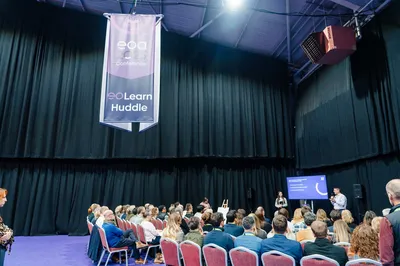
Photos by Chris Read-Jones Photography for EOA Conference
Learning from other EO models
The final keynotes highlighted how varied EO models can be. Some organisations offer share-purchase schemes that build ownership over time, others give junior employees an early stake, and others focus more heavily on democratic structures than financial ones.
We also heard reflections on the broader role EO can play in tackling inequality and shaping fairer economic systems.
Ultimately, EO isn’t one model, it’s a set of principles organisations interpret and evolve over time.

Looking ahead
We left the conference energised by new ideas we can apply to our own co-ownership journey. A few next steps stand out:
- Refreshing our EO introduction for new starters so it feels inspiring, practical and clear, and grounded in our values.
- Exploring a “Broken Windows” space to help co-owners surface small issues before they grow.
- Balancing output and values in performance conversations, recognising cultural contribution alongside delivery.
- Creating more visible “you asked, we did” updates, showing how employee voice translates into action.
- Strengthening leadership development through the lens of EO, including understanding which leadership styles we want to develop.
The conference was a welcome reminder that employee ownership is something you practise, not something you complete. It takes intentionality, openness and a willingness to evolve.
Thanks to the EOA community for the generous conversations and shared learning. See you next year!
More
-

How to get started with Wagtail AI: a practical guide
Thibaud Colas Engineering Manager & Wagtail Product Lead
- See more posts